

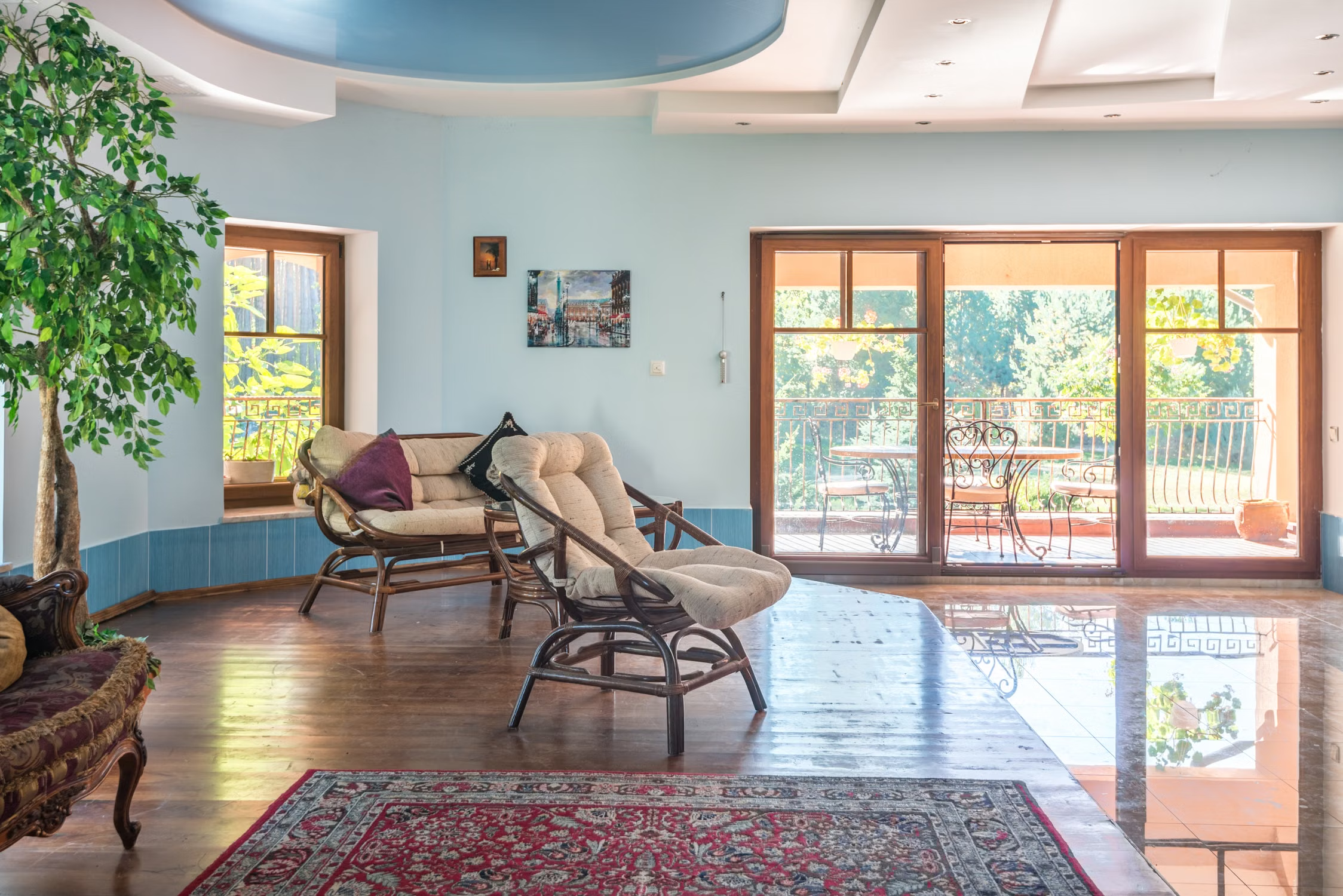
An outdoor area can change how a home feels, but its value to a household depends on more than its advertised size. A small balcony beside the kitchen may support breakfast every morning. A large rooftop terrace may remain unused if access is awkward, the wind is uncomfortable, or maintaining it becomes a burden. A garden can provide generous room for hobbies while also bringing irrigation, cleaning, and absence-management responsibilities. When comparing homes in Turkey, treat outdoor space as a room with practical operating conditions. The aim is to understand what you can comfortably do there, what ownership and management documents actually say, and what care will be needed after the attractive viewing photographs have been forgotten.
Describe the activities before choosing the type
Write a short list of realistic uses. Do you want coffee for two, a dining table for family meals, a reading chair, container plants, or room for a child to play under supervision? How often will each activity happen, and at what time of day? A household that mainly wants a convenient morning seat may not benefit from the same space as someone who enjoys extensive gardening. Separate essential uses from imagined occasional entertaining. This makes comparisons more honest because a large area does not automatically improve the activities that matter to you. Bring the list to viewings and ask whether the specific layout supports it without requiring several unconfirmed alterations after purchase.
Measure usable space rather than trusting the headline
Ask how the advertised outdoor area was measured and identify columns, narrow edges, fixed equipment, door swings, and circulation routes. A long shallow balcony may have the same area as a compact rectangle but accommodate furniture differently. Sketch the intended table or chairs at approximate scale, leaving room for movement and opening the door. Do not count a corner as useful simply because it appears within an outline. Consider how someone carries food, moves a chair, or returns indoors with wet shoes. If outdoor space is a major reason for the purchase, an accurate measured plan is more useful than a wide-angle photograph or a total square-metre figure that combines several disconnected areas.
Examine the connection with the indoor rooms
Think about the route between kitchen, living area, bathroom, and outdoor space. A terrace reached through a bedroom may be inconvenient when guests visit. A garden accessed only by stairs may be less usable for someone with limited mobility or for a household carrying bulky items. Check thresholds, door operation, and where shoes, cushions, or gardening tools would be kept. These observations concern everyday convenience; they do not establish compliance with accessibility or building requirements. If a change is necessary, investigate feasibility with an appropriate professional before relying on it. A beautiful outdoor area works best when the indoor layout supports the way you intend to use it.
Visit during the hours you expect to be outside
Sunlight can make an area inviting at one time and uncomfortable at another. Try to observe the space during your preferred period, and note shade from the building, neighbouring structures, and existing planting. Ask what can be adjusted and what is fixed. An upper balcony may shade a lower one, while a rooftop may be exposed for longer. Do not assume that a photograph taken in one season represents every month. The same applies to evening use: consider lighting, neighbouring windows, and whether the route back indoors is convenient. Your goal is not to find a universally perfect orientation, but to understand how the actual space fits your routine.
Check exposure without unsafe experiments
Wind matters for sitting comfort, plants, loose furniture, and the way doors behave. Observe ordinary conditions from a safe position and ask about the owner's experience across seasons. A calm viewing does not prove a terrace is sheltered throughout the year. Equally, a windy appointment does not describe every day. Do not climb railings, lean over edges, or test barriers by force. If the design raises a structural or safety question, obtain a professional inspection. Possible screens or shade structures should be treated as proposals requiring investigation, not as automatic solutions. Their suitability can depend on wind, fixings, weight, appearance, and whatever permissions apply to the particular building.
Evaluate privacy from ordinary positions
Sit where the dining chair or lounger would be and look at relevant sightlines. Consider neighbouring balconies, windows, shared paths, and the view from above. Privacy while standing may differ from privacy while seated, and a space can feel more exposed after dark when interior lighting is visible. Discuss what level of screening your household needs. Do not assume tall planting or a solid enclosure can simply be added later. Ask about permitted changes and the practical effect on light, airflow, maintenance, and surrounding residents. A realistic privacy assessment is about comfortable use, not creating an unrealistic expectation that outdoor urban living will be invisible to everyone nearby.
Read water clues carefully
Look for visible staining, damaged finishes, persistent puddling, or signs of previous repair around the outdoor area and the room beneath it where access is available. Ask how rainwater is intended to leave the space, who clears accessible outlets, and whether there is a documented history of water entry. These observations are reasons to investigate, not a diagnosis of the hidden construction. Building guidance identifies drainage and waterproofing as important issues for balconies and terraces. A buyer should ask an appropriate professional to evaluate material concerns rather than pouring water, blocking drains, lifting finishes, or accepting a cosmetic patch as proof that an underlying issue has been resolved.
Understand the outdoor-to-indoor junction
The doorway is a daily-use detail and an important place to ask questions about weather protection. Observe the threshold, surrounding finishes, and any history of water reaching the interior. A flush-looking transition may be convenient, but appearance alone does not explain how the complete detail manages rain. Likewise, a raised threshold may influence accessibility and furniture movement without automatically indicating a defect. Ask for available information about previous alterations, especially if the balcony has been enclosed or flooring levels changed. Do not infer legal permission or technical suitability from the fact that the work already exists. Establish what can be confirmed and what needs separate professional or documentary review.
Match planting ambitions to the actual conditions
Container gardening differs from planting in open ground. Consider the sunlight, exposure, access to water, and the time you can give to care. The RHS highlights wind, sunlight, container weight, and watering as important considerations for balconies and roof gardens. Use that general framework to ask locally appropriate questions rather than importing a plant list without considering the site. Heavy containers, accumulated materials, and permanent landscaping should not be introduced without checking structural suitability. A professional should advise where needed. For a buyer, the most useful first step is a modest plan with realistic access and upkeep, rather than assuming that every attractive planting idea can be implemented safely and easily.
Plan water, storage, and cleaning together
Ask where watering water comes from and how hoses or containers will be handled without obstructing access. Consider where tools, soil, cushions, and outdoor cleaning equipment would be stored. If irrigation is already installed, request a demonstration and identify who services it. Think about where excess water travels and whether it affects neighbouring property. Do not assume an outdoor tap or socket is suitable for every intended use; relevant equipment and alterations may require professional advice. Cleaning also deserves a practical plan. An area that looks effortless during a viewing may need regular attention to leaves, dust, furniture, and drainage access, particularly when the home is left vacant for periods.
Establish rights and responsibilities through documents
The phrase “private garden” in an advertisement may not explain the exact ownership or use arrangement. Ask the appropriate professional to review the property documents, the relevant plans, and any management provisions. Clarify boundaries, exclusive-use arrangements if applicable, access for maintenance, and responsibility for repairs. A terrace can also interact with the roof or another unit below. Do not infer responsibility from the location of a tile or a fence. This guide does not decide legal rights. It encourages a buyer to obtain a clear answer from the relevant documents and qualified advisers before relying on an outdoor area as a permanent, unrestricted extension of the home.
Ask about changes before designing the makeover
Enclosures, pergolas, awnings, screens, outdoor kitchens, and substantial landscaping can involve technical and permission questions. Before budgeting a transformation, ask what approvals may be needed and who can confirm the position for this property. Include management requirements and effects on neighbours, shared structures, and the building's appearance. An agent's informal assurance is not a substitute for a properly established answer when the change is essential to your purchase. Also consider reversibility and future maintenance. If the space is only attractive after a large unconfirmed project, compare it with a home whose existing outdoor arrangement already meets your needs. The simpler option may offer a more understandable route to everyday enjoyment.
Include absence and seasonal care
A second home needs a plan for the weeks when nobody is there. Who checks after severe weather, waters plants, secures movable furniture, and notices a developing maintenance problem? Discuss access arrangements without giving unnecessary access to people whose role has not been agreed. If a management service is proposed, clarify what it actually includes and how issues are reported. Seasonal care also affects permanently occupied homes: outdoor cushions need somewhere to go, planting changes, and exposed finishes may require attention. These are ordinary ownership responsibilities rather than reasons to avoid outdoor space. The point is to understand the workload and cost before paying for an area that may be harder to manage than expected.
Compare the complete outdoor living package
Imagine three hypothetical options: a convenient balcony with room for two chairs, a spacious exposed terrace, and a garden requiring more regular care. The correct choice depends on your activities, access needs, privacy preferences, and willingness to maintain it. Build a comparison that includes usable layout, indoor connection, sun and wind, water-related questions, documented rights, and recurring work. Mark each item as confirmed, claimed, or unresolved. Do not assign value solely by size. Before committing, resolve issues that could materially change your ability to use the space. Outdoor living becomes a genuine benefit when the physical conditions and responsibilities fit your household, rather than merely producing a striking photograph in the property listing.
Technical background and sources
- Royal Horticultural Society: Roof gardens and balconies
- Building and Plumbing Commission: Water ingress on balconies, decks and terraces
- U.S. Environmental Protection Agency: Moisture control guidance
Cover photo: Pexels. Illustrative image; not a property listing or an endorsement. Pexels · Pexels License

Residence TR Editorial
Conducts in-depth research at Residence TR on architectural history, Bosphorus waterfront mansions, urban regeneration and legislation affecting international investors.
Planning a property investment in Turkey?
Work with our specialists to identify residential projects that suit your budget, investment goals and citizenship eligibility requirements.