

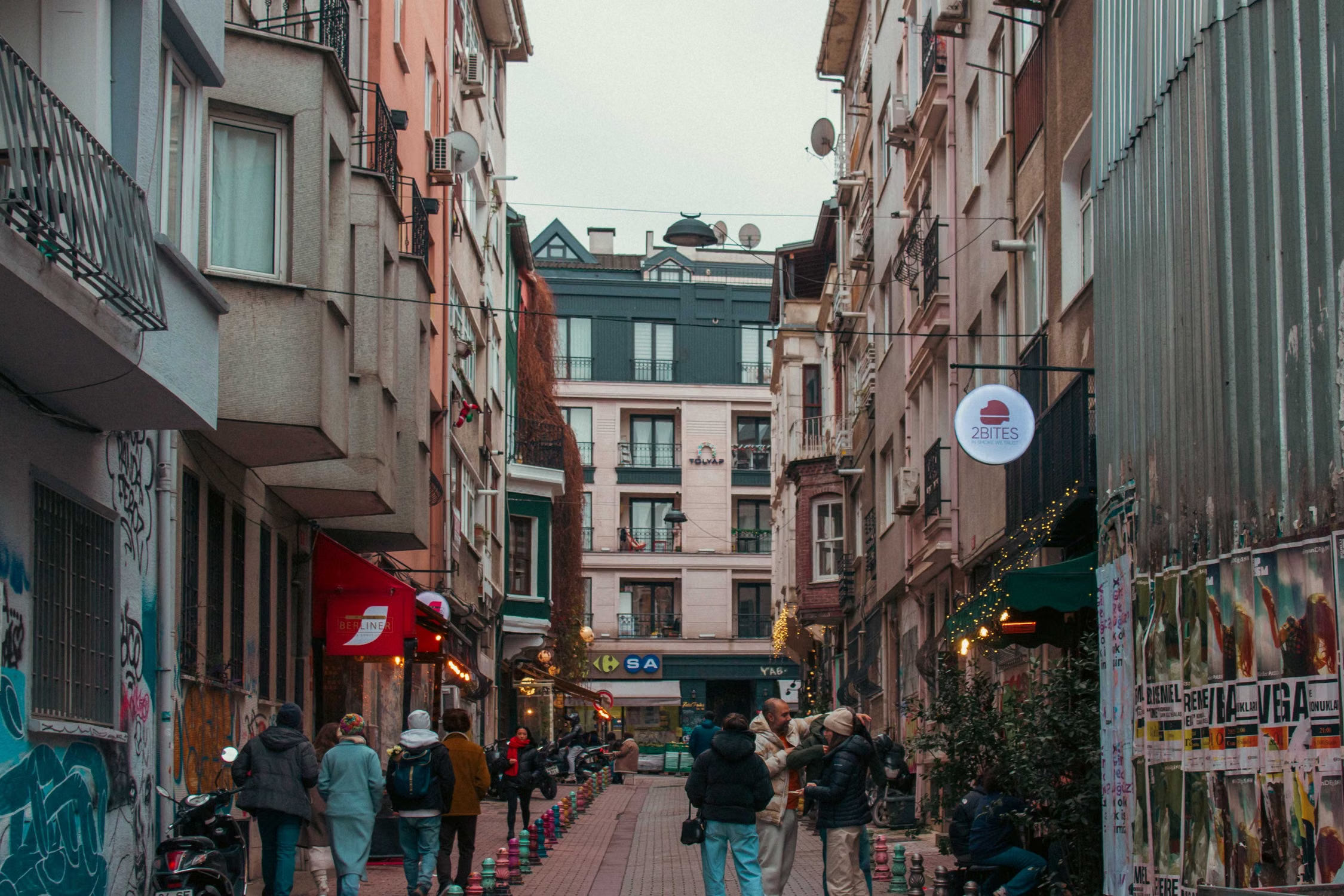
European Istanbul offers many versions of family life, and a district name cannot tell you which one will suit your household. Sarıyer, Beşiktaş and Bakırköy are useful starting points because they represent different parts of the city, but each contains varied neighborhoods and building conditions. Instead of asking which district is the best for families, ask which address can support your family’s actual schedule with the fewest difficult compromises. This guide provides a structured way to compare homes without turning impressions about prestige, greenery or centrality into promises that a particular property cannot deliver.
Define what a family home needs to do
A family brief should describe activities before it describes bedrooms. List school mornings, adults’ working hours, childcare arrangements, homework, visitors, sports equipment and the storage you need. Think about the next few years rather than only the day you move in. A room used for toys today may become a study space, while an older relative’s visits may make step-free access more important. Decide which requirements are essential and which are preferences. This makes it easier to reject an impressive property that cannot accommodate a non-negotiable part of daily life.
Ask every household member to contribute. One person may want an easy drive, another may want to travel independently, and a child may need a quiet place for schoolwork. Write these needs down before viewing so that the strongest speaker does not unintentionally dominate the decision. A family home is a shared operating system: a location that works beautifully for one adult but creates dependence for everyone else deserves careful reconsideration. Identify the trade-offs you can accept together, rather than discovering them after a purchase.
Understand the three search areas at street level
Sarıyer spans different settings, so a home’s relationship to the coast, hills, main roads and transit matters more than the district label. Beşiktaş also combines contrasting streets and building types, including locations where activity and access change within a short walk. Bakırköy should likewise be explored through specific neighborhoods and actual routes rather than a single general description. In all three, the character of the immediate block can be more important to family routines than a broad reputation gathered from tourism or property advertising.
Choose two or three addresses in each area that fit your brief and compare them directly. Walk the surrounding blocks, noting where useful shops cluster and where traffic becomes difficult. Record gradients and crossings rather than simply describing a neighborhood as walkable. If a seller mentions a nearby park, visit the entrance you would use and complete the route with your children’s needs in mind. A district-level comparison becomes meaningful only when it connects to places you can physically use from the home.
Let verified transport shape the shortlist
Metro İstanbul’s current network information identifies M2 connections toward Hacıosman, M7 at Yıldız and the M3 connection at Bakırköy. These are useful network anchors, not a guarantee that any property carrying one of the three district names has easy rail access. Consult the operator’s line pages and notices for current arrangements. A listing’s “minutes from the metro” may describe a drive, a fast walker or a different entrance from the one your family can use comfortably. Request the exact station and then test the approach yourself.
Build a door-to-door journey, including school drop-off if it is part of your morning. Test the return at the time you normally travel, not only during a quiet weekend viewing. Where two adults travel in different directions, compare the household total rather than optimizing one person’s route. Ferry or bus alternatives may be useful, but they should be checked against current operator information and experienced in practice. Keep a clear distinction between an operating connection you can use now and a future transport idea mentioned in sales material.
Confirm school arrangements independently
A school name on a property brochure is an invitation to investigate, not proof that the school is suitable or available. Contact the institution directly about the age group, language of teaching, admissions process and any relevant transport arrangements. If a particular school is central to the move, clarify it before placing substantial weight on nearby housing. Do not assume that geographical proximity establishes eligibility, available places or a convenient collection schedule. The useful question is whether the school arrangement works for your child and your household, not whether a school exists nearby.
Travel between the candidate home and the actual school entrance during the relevant hours. Consider where the vehicle stops, whether a child can walk safely with an adult and how the journey changes when a different person handles collection. Add extracurricular activities to the map, including the late return. Ask what happens on days when parents work longer or a school activity ends early. Family convenience often depends on these less photogenic details more than on a building’s reception area or a long list of shared facilities.
Examine walking independence and crossings
Walkability is a sequence of conditions, not a straight-line distance. Follow the route to a useful grocery shop, pharmacy, local playground and public transport stop. Note pavement continuity, steep sections, difficult driveways and crossings where children need extra help. Repeat a short section with a pram if you use one. For older children, think about the journeys they could reasonably make independently as they grow. A home can offer more practical family freedom when ordinary needs are reachable without arranging a car for every small task.
Observe the route after dark and in a busier period. Look for lighting, activity and sightlines rather than assuming that a quiet daytime appearance tells the whole story. Avoid general claims that one district is inherently safer than another; assess the specific environment and seek local information relevant to your household. A low-traffic street may still have a difficult crossing, while a busy street may have a useful controlled crossing nearby. Document the actual feature and decide whether it is manageable for the people who will use it.
Separate access to greenery from a green-looking view
A leafy outlook can be pleasant without giving children an accessible place to play. Visit the park or shared garden, check the route and determine how it is actually used. Is there an entrance close to your building, suitable seating for accompanying adults and enough room for the activity your family wants? If the property has landscaped common areas, ask which parts residents can use and whether restrictions affect play. A brochure image of planted space does not establish permission or day-to-day usability.
Check how the home relates to outdoor space in less attractive weather as well. A distant recreation area may be excellent for planned weekend trips but irrelevant to an hour between homework and dinner. A smaller nearby place may be more useful. Compare the kind of outdoor life you can maintain regularly in Sarıyer, Beşiktaş or Bakırköy from the exact candidate address. Keep the distinction between a view, a destination and an everyday extension of home clear in your comparison notes.
Inspect a layout for simultaneous activities
A family apartment needs to work when several things happen at once. Imagine someone on a video call while another adult prepares dinner and a child does homework. Check whether sound travels through an open layout and whether doors allow quieter zones. Place your real furniture on a measured plan, including storage rather than only beds and sofas. A larger advertised area does not automatically solve circulation, privacy or usable wall space. Ask how the area is calculated and inspect the rooms that make up the number.
Think about arrivals and departures. Where do shoes, school bags, coats and wet umbrellas go? Can a pram enter without blocking the hallway? Is there somewhere for cleaning supplies, sports equipment and spare bedding? Check bathroom access during a busy morning and look at how laundry will be managed. These questions are not glamorous, but they determine whether a home stays comfortable after the first week. Make a separate list of necessary changes and ask whether they are technically and practically feasible before assuming you can alter the apartment later.
Give building checks their own decision stage
A family-friendly street does not establish a building’s structural or maintenance condition. Request the relevant documentation and use independent professionals for legal and technical questions. Istanbul Metropolitan Municipality’s building inspection information explains that its rapid screening process is distinct from a detailed assessment. Read the scope of any report carefully and confirm the building it concerns. New finishes or an impressive lobby cannot replace evidence about the structure, alterations or maintenance history. Treat unresolved technical questions as unresolved, even when the neighborhood feels ideal.
Inspect the lift, stairs, entrance, basement access and common spaces. Look for visible moisture and ask about repair records, not simply whether management is responsive. For a household with children or an older relative, examine how people leave the apartment and building, and seek professional clarification of emergency arrangements where needed. Do not improvise a structural diagnosis from surface cracks. Your role as a buyer is to recognize questions and obtain reliable answers, not to substitute a visual impression for a competent inspection.
Compare services with the cost and rules attached
A pool, gym, playroom or staffed entrance can be useful, but usefulness depends on access, opening arrangements, maintenance and household habits. Ask how the facilities operate, whether any are separately charged and what rules apply to children or guests. Visit them rather than accepting a photograph. An impressive amenity that your family cannot use at the relevant hour contributes less value than a modest facility that fits your routine. Also inspect the routes between the apartment and these spaces, including lifts and outdoor sections.
Request the current common charges, recent expenditure and known major works. Make clear which figures are confirmed and which are provisional. A service-rich development may create obligations that continue during holidays or periods when the apartment is empty. Compare the full recurring burden with a simpler building in a location you can use more independently. Choose amenities because they solve real needs, not because the list is longer. A sustainable family budget protects the everyday quality of life that the purchase is supposed to improve.
Plan for healthcare, visitors and occasional disruption
Identify the healthcare services relevant to your household and check the actual route and appointment arrangements directly. A map full of medical pins is less useful than knowing where you would go for the care you regularly need. Include visits from relatives, guests arriving with luggage and delivery access in your thinking. Confirm whether the building entrance and lift can accommodate your circumstances. A home that works during an ideal week should also remain manageable when somebody is unwell or an extra adult stays for several days.
Consider a short period without your usual car, school helper or preferred transport. Write down who could do the essential journeys and how much additional organization would be needed. You are not trying to eliminate every inconvenience. You are checking whether the household has enough flexibility to handle ordinary disruptions without turning each one into a crisis. This practical resilience can matter more than choosing the address that wins on a single best-case commute calculation.
Decide with a family trial day
Create a comparison sheet for every candidate with school logistics, adult journeys, independent errands, outdoor access, layout, documentation, charges and unanswered questions. Weight each section according to your own family. Before committing, spend an ordinary day around the preferred address: make the morning trip, walk to shops, test the afternoon school route and return in the evening. Where possible, stay nearby briefly to understand the area outside a scheduled viewing. Resolve important uncertainties with the relevant institution or independent professional.
The best choice among Sarıyer, Beşiktaş and Bakırköy is therefore an address-specific conclusion, not a universal ranking. A suitable home connects reliable information, an adaptable layout and workable family routes within a budget you can sustain. Keep current transport information separate from future proposals, verify school arrangements directly and assess the building on its own evidence. When you give these ordinary details the attention they deserve, you can choose a European Istanbul home that supports real family life rather than only an appealing weekend impression.
Sources for current information
- Metro İstanbul: Current metro lines
- Metro İstanbul: M3 Bakırköy–Kayaşehir
- Metro İstanbul: M7 Yıldız–Mahmutbey
- Istanbul Metropolitan Municipality: Building assessment scope
Cover photo: Pexels. Illustrative image; not a property listing or an endorsement. Pexels · Pexels License

Residence TR Editorial
Conducts in-depth research at Residence TR on architectural history, Bosphorus waterfront mansions, urban regeneration and legislation affecting international investors.
Planning a property investment in Turkey?
Work with our specialists to identify residential projects that suit your budget, investment goals and citizenship eligibility requirements.